UTMB Mandatory Gear List
The UTMB is one of the world's toughest ultra-marathons, covering 106 miles with over 32,000 feet of elevation gain around Mont Blanc. The key to finishing this grueling race is not just stamina and grit, but strict adherence to the UTMB Mandatory Gear List. All runners must pass a mandatory gear check before and possibly during the race to ensure safety. This guide breaks down every required item to help you prepare confidently for the epic challenge.
Basic Apparel Requirements
When push comes to shove, a runner's apparel is as important as a football player's helmet when up against the unforgiving Mont-Blanc trails. With a wide range of weather conditions that runners can experience during the race, from freezing temps to extreme heat, it is vital that runners carry the required equipment below to stay safe throughout the arduous course and avoid life-threatening conditions such as hypothermia or heat stroke.

Waterproof Jacket and Waterproof Pants
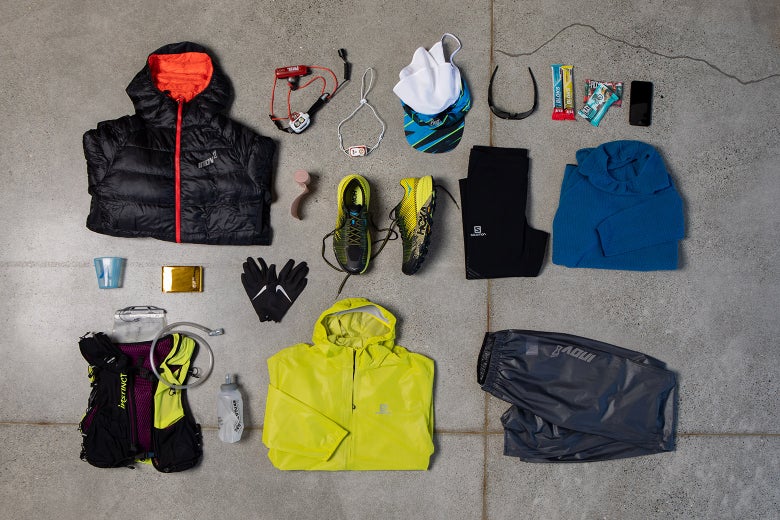
Given the dramatic elevation changes and overall variable weather one can encounter throughout the UTMB, runners must carry a jacket. Specifically, this jacket must have a waterproof, breathable membrane with sealed seams and a hood. Runners are also required to have waterproof pants. These garments are crucial for keeping runners dry and, more importantly, warm throughout the entire race, and can be the difference between finishing and dropping out early.
Long Pant or Racing Tight
To protect against cold and harsh conditions, the rules require that your legs be fully covered at all times. Most runners meet this with full-length race tights. Long socks paired with capri-length tights are also permitted.
Additional Warm Layer
The UTMB's massive elevation gain (over 32,000 feet) and nighttime running make an extra warm layer mandatory.
You can choose one of the following:
- A second warm layer, or
- A long-sleeved top (minimum 180 g), or
- A long-sleeved base layer (minimum 110 g) paired with a windbreaker on top.
Important: No cotton fabrics are allowed — They hold moisture and are prohibited.
Basic Clothing Accessory Requirements
Along with basic apparel requirements, there are a few accessories that runners are required to carry to help them complete the UTMB. These additions may seem small, but they can have a big impact on the success of your race.
Hats or Beanie
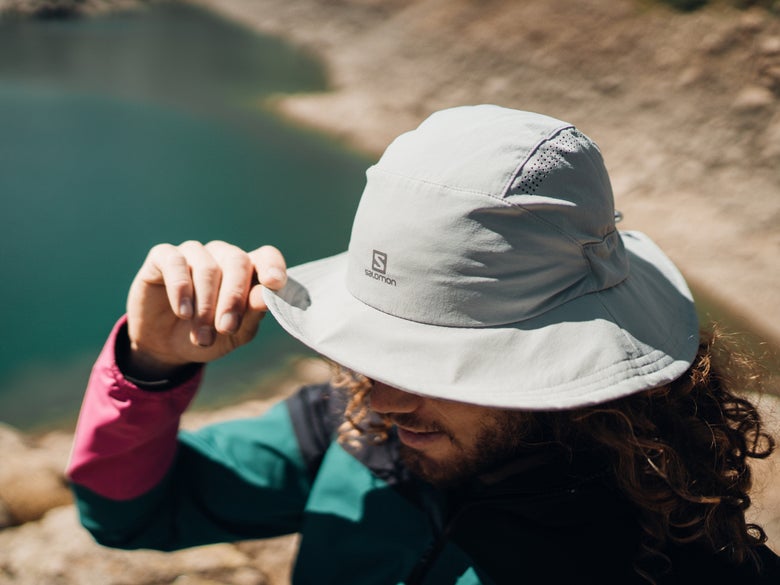
At UTMB, a good hat or beanie isn’t just a style choice; it’s essential gear. Whether you’re out in the sun or pushing through colder conditions, headwear helps regulate your body temperature and keeps you comfortable. A beanie is great for when the weather turns out to be colder, and a dedicated hat keeps your head protected from harsh UV rays and helps wick away sweat from your head! Think of it as a small item that makes a big impact on your performance and overall experience.
Bandana or Neck Gaiters
When you need more coverage for your neck and face, grab a bandana, balaclava, or neck gaiter! These running accessories help shield your face from the sun or provide warmth for your face to help keep you focused on the course. In addition, they can even double as a quick sweat wipe. Lightweight but super useful, it’s a small accessory that pulls big duty in keeping you comfortable and prepared.
Gloves
Cold hands are often an early warning sign of dropping body temperature and can become a major distraction during long efforts. For this reason, runners are required to carry warm, waterproof gloves or mittens for the entire race.
Essential Equipment and Gear
In addition to apparel items, there is required gear and equipment that all runners must carry to run the UTMB. Race officials may mandate these pieces of hardware, and runners will undoubtedly appreciate having these essentials on hand.
Lighting
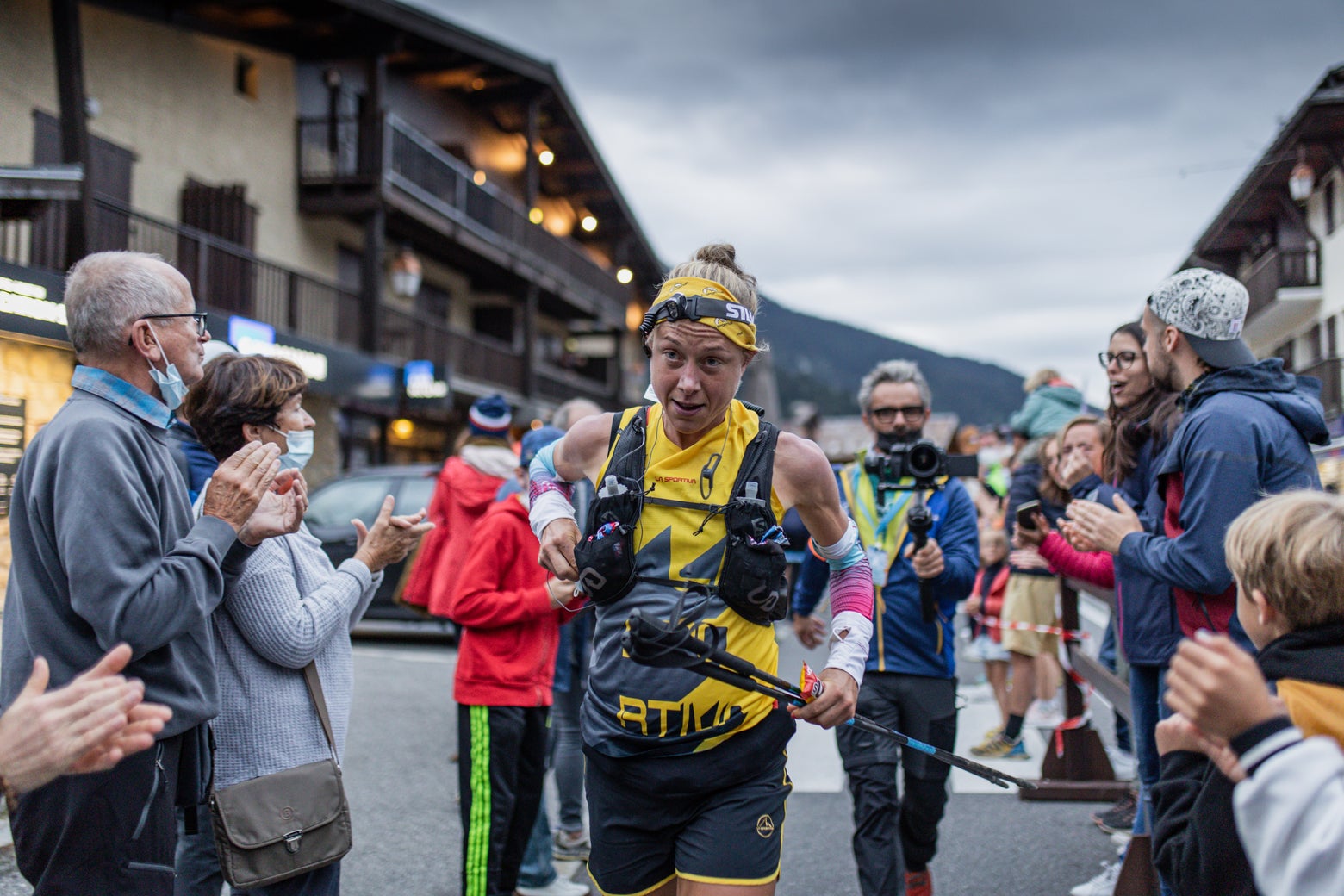
Each runner must carry two different headlamps or flashlights at all times and must have spare batteries for each. The race officials recommend that the primary light be at least 200 lumens to enhance visibility during nighttime sections of the course.
Packs
UTMB participants are required to use a pack or belt to hold all of their mandatory equipment. It is important to choose a pack that fits properly and will be comfortable while traversing long distances. Again, this pack must be able to hold all other required gear, so test things out before race day, ensuring optimal functionality and convenience throughout the event.
Hydration and Nutrition
Mandatory Hydration Requirements:
- Minimum 1 liter water capacity (use a hydration bladder, soft flasks, or bottles — whichever works best for you).
- Personal cup: Minimum 150 ml volume with no lid (for use at aid stations).
Nutrition Recommendation:
Carry at least 800 kcal of emergency food (roughly equivalent to 2 gels + 2 energy bars). This reserve can be a lifesaver in case of delays or bad weather.
Safety Items
If you are an avid trail runner, you know how unpredictable and potentially dangerous grueling weather conditions can be, especially in geographically remote locations. To help ensure safety throughout the race, all runners are required to carry a few essential accessories on their person. For injuries, you will need a self-adhesive elasticated bandage (minimum size 100 cm x 6 cm) and a survival blanket measuring at least 1.4 m by 2 m. If emergency services need to find you, it's required that you have an emergency whistle, valid identification (passport or ID card), and a mobile phone that remains switched on at all times with international roaming enabled.
Weather-Related Gear Requirements
The basic apparel requirements listed above must be adhered to at all times, but there are also weather-dependent requirements that all race participants must be ready and equipped for. To further prepare runners for any weather that the Alps can throw at them, these additional gear can be in response to hot or cold weather.
Hot-Weather Gear
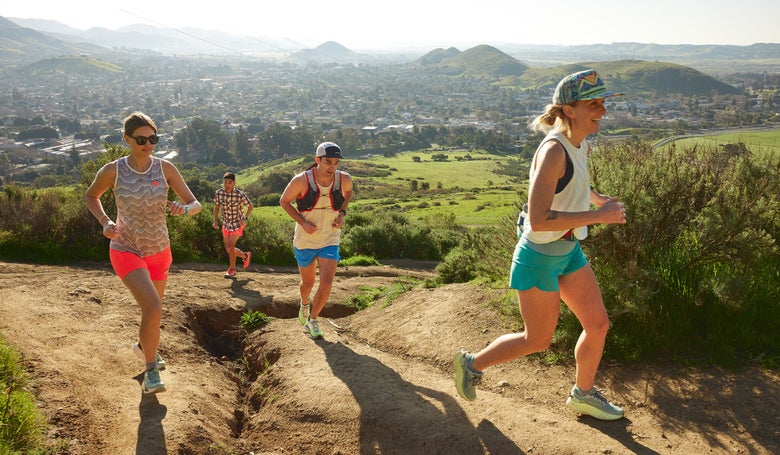
When the weather is hot, race officials may deem any of these items as required:
- Sunglasses (can also double as protective eyewear in cold weather)
- Sun hats or neck gaiters, any combination which completely covers the head and nape of the neck.
- Sunscreen - Recommended minimum 50 SPF
- Supply of water - 2 liters minimum
Cold-Weather Gear
On the other side of the spectrum, in cold weather conditions, race officials may deem any of these items as required:
- Protective eyewear like goggles or sunglasses
- Third warm layer - This is a jacket or fleece to go between the second layer and the waterproof jacket
- Robust and closed trail-running shoes (minimalist or ultralight shoes excluded)
- Recommended - Fleece or compressible down jacket
Get Yourself Ready
After purchasing all your gear and clothing, it's important to get your body ready for the race! Building a strong running base with gradually increasing weekly mileage and back-to-back long runs will help you establish a firm foundation. Train specifically for trail terrain, hills, and technical descents, which you can be sure to find during the race. Get to know how your body reacts to your race-day nutrition and hydration. Train your mind and get proper sleep to be at your sharpest.
At the end of the day, no matter how much gear you have, the final factor comes down to you. Take care of your body before and after the race, and remember to have fun!