Track & Field and Cross Country Guides
Best Distance Spikes of 2026

No matter where you are in your cross country journey, whether you're just starting out or have been running for years, it's vital to have a cross country spike or flat on your feet come meet day. Cross country courses require a specialized shoe that allows you to handle all manner of elements, ranging from mud, rain, hills, obstacles, and uneven surfaces across parks, golf courses, and open fields, all for the chance to be crowned champions.
There are many factors to consider when searching for the best cross country shoe for you: from course requirements to durability, cushioning, breathability, traction, and more. We, here at Running Warehouse are here to provide our expert tips and recommendations for 2026 in the world of cross country shoes to give you everything you need to make the best buying decision.
- Beginner to experienced cross country runners looking for reliable spikes or flats.
- Athletes needing racing shoes that handle mud, hills, and uneven terrain with confidence.
- Not ideal for road-only racers!
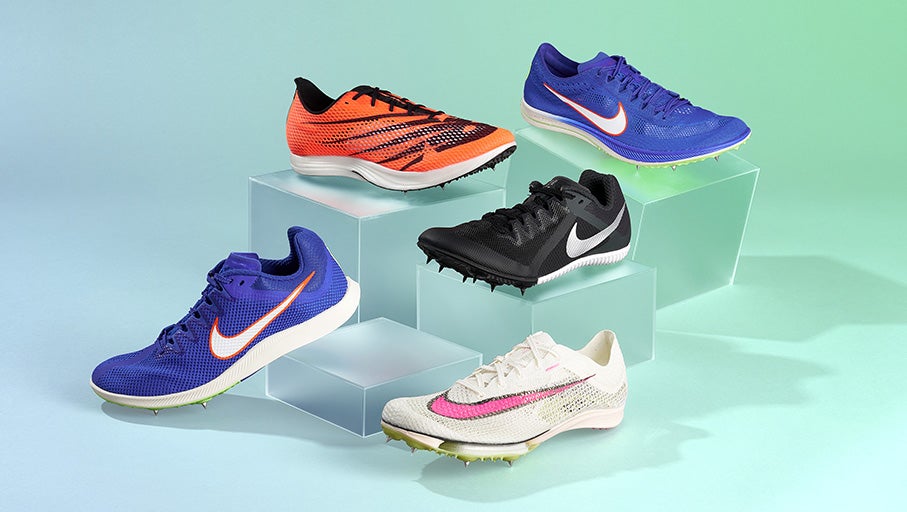
Built for elite performance, super spikes are known for their next-generation foam, delivering exceptional energy return and rebound to help runners get the most out of every stride. Leading the pack this year, the Nike ZoomX Dragonfly XC 2 Spikes take the podium as our pick for the best super spike of the year.
These high-performance spikes have all the tools needed to dominate tough cross country courses at an elite level. Inspired by the original track Dragonfly, the Dragonfly XC 2 brings the same superior elements: a responsive Pebax plate, a lightweight engineered mesh upper, and, most notably, a full-length ZoomX foam midsole. This standout foam provides a springy, propulsive ride that maximizes energy return without adding extra weight.
Thanks to this combination of cutting-edge components, the Dragonfly XC 2 is our top choice for competitive runners eyeing state medals, trying to crack the top seven, or chasing new personal records.
At A Glance:
We'd be hard-pressed to find a better option for your first cross country shoe than the Nike Zoom Rival XC. We try to reserve "can't go wrong" status for a select small group of footwear, and the Rival XC is firmly on that list. With a protective midsole, structured upper, and grippy traction, this is a welcoming gateway spike for your peace of mind and confidence as you toe the line for the first time.
If you race on asphalt or cannot use spikes on specific courses, this shoe also comes in a spikeless version called the Rival Waffle XC. Both the spikes and spikeless options are available in Kids' versions, too! Ultimately, with their great price and trustworthy fit, the Nike Rival XC and Rival Waffle XC are fantastic, versatile options for runners of any level.
At A Glance:

The two primary types of cross country shoes are spikes and flats. Both have similar fits and features but differ in their best uses. Spikes are advantageous for courses that will be wet, muddy, or soft, whereas flats are ideal for courses that have large sections of pavement.
CROSS COUNTRY SPIKES
Some cross country shoes allow you to screw spikes into the bottom of the shoe. This allows runners to grip the ground more aggressively, helping them race with more confidence in each stride. Different types of spikes let runners adapt their shoes to the terrain of the race. Shoes with shorter spikes provide better traction on grass and gravel, while longer spikes work best on wet, muddy, or loose terrain.
CROSS COUNTRY FLATS
Cross country shoes without spikes are called flats, spikeless, or waffle. In place of spikes, flats have rubber nubs for traction. Cross country flats are suitable for courses that are dry and have sections of paved paths. Always check with your coach and the race venue to see if spikes are permitted for that event. If you have a cross country spike shoe, you may insert blanks into the shoe when spikes are not allowed.
If you run high school cross country in California, spikes are not allowed in most CIF sections and are also not suitable in CA due to the amount of paved sections on the courses.
If you're new to cross country, a standard pair of spikes will offer reliable comfort and performance, even if they’re slightly heavier. More experienced runners seeking maximum performance may want to invest in advanced spikes that feature top-tier technology, such as super foams and carbon plates—for example, the adidas Avanti XC or Nike ZoomX Dragonfly XC 2.

With a staff of running enthusiasts and footwear experts, we’re always working to stay up-to-date on the latest advancements in running gear. By combining personal, hands-on experience with real-world customer feedback, we continually assess which products offer the best performance, the most comfortable fit, and the key features that runners across various disciplines prioritize.
For a detailed explanation of how we test shoes and why you should trust our recommendations, read about our running shoe testing methodology.
No, we don't recommend racing spikes for road running due to their hard pins and minimal cushioning. Even without the pins inserted, the empty receptacles would be uncomfortable and "clacky." For road running, go with road shoes or possibly spikeless cross country shoes.
Go with your usual shoe size since the spikes will likely fit tighter automatically. Please contact us, or head to our learning center, and remember that we offer 90 Day No Sweat Returns. We've got you!
Spikes and spikeless racing shoes are lucky to last one full season of meets. These shoes are designed to be featherweight and fast, not durable. In contrast, regular daily training shoes for roads and trails usually last 300+ miles. For everyday trainers, pay attention to cushioning that feels "dead" if you're experiencing extra aches and pains, and watch for worn rubber outsoles that are getting smoothed out as signs they need replacement.
The key traction features in a cross country shoe are the outsole design and spike layout. Typically, built-in or removable spikes are the key ground grippers, bringing most of the traction. In spikeless flats, rubber studs and textured outsoles are the key grippers. Smooth outsoles may work on the road, but with cross country, the rougher the better.
Not necessarily. Depending on the region, spikes may not be allowed. For example, California doesn't allow spiked shoes for competitive cross country, so different types of shoes or cross country flats are the only options. Be sure to check with your coach for local regulations!
Ripping shoes for the first time on race day can be hazardous. Taking some time to break in your spikes and make sure they work for you is key! We recommend trying them out on proper terrain (don't take cross country spikes on pavement or the track). Find a nearby course, grassy field, or dirt path similar to what you'll be racing on.
Because flats and spikes are more grounded than typical trainers, it may take a few sessions for your legs to adapt to those stresses. Test things before race day to make sure your footwear is the last thing you need to think about as you chase those PRs.
Now that you've read about the best cross country shoes of the year, it's time to gear up and get out there! Whether you’re at the start of your cross country career or are a seasoned runner looking to shake things up, taking the time to find a shoe that checks the boxes for your needs is sure to help put you in the front of the pack.
As always, our experts are happy to help answer any questions by phone, live chat, or email. Good luck this season, and happy running!