A Beginner's Guide to Track & Field Throwing Events
It's that time of year again when track and field is ramping up, so we want to prepare you for the right gear to set personal records this season! There are four main throwing events in track and field: shot put, discus, hammer throw, and javelin. Each event tests an athlete's strength, technique, and coordination, but the movements and footwear requirements differ. With insights from renowned track and field coach Harry Marra, we'll break down each event and help you choose the right throwing shoes for your technique.
Harry Marra is best known as the coach of former decathlon world record holder Ashton Eaton and Olympic medalist Brianne Theisen-Eaton. Marra's other accolades include 2016 IAAF World Athletics Coach of the Year, 2012 Nike Coach of the Year, and the author of the 2022 book Stories From the Passenger Seat: Lessons Learned From a Lifetime of Coaching.
What Are the Different Track & Field Throwing Events?
Track and field throw events test an athlete's strength, coordination, and throwing ability with implements of various weights and shapes. These different events have a long, rich history, some of which date back to ancient Greece's original Olympic pentathlon events. Four different events lie within the throw category in track and field: shot put, discus, hammer, and javelin.
Shot Put

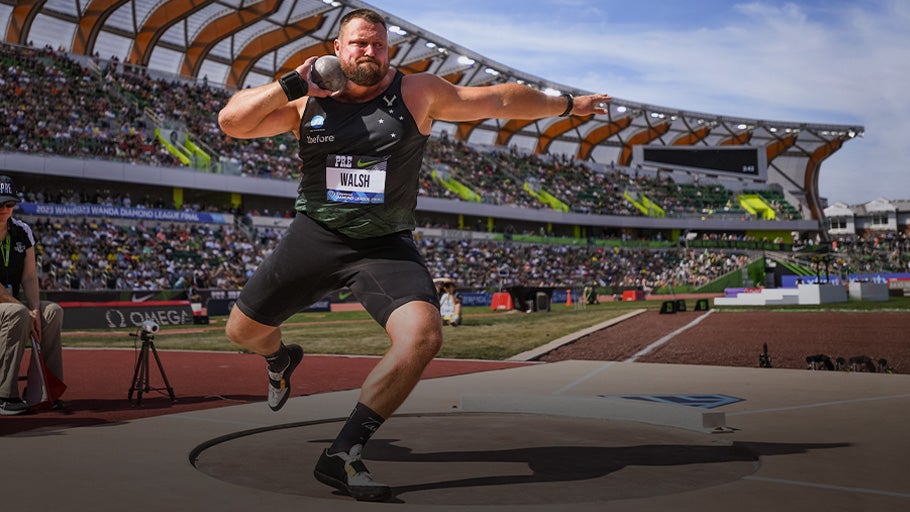
The shot put competition layout consists of a throwing circle, a stop board, and a landing sector or grass area. The competitor stands inside a circle and attempts to "put" a weighted ball as far as they possibly can into the landing area without going out of the throwing circle during the throw. The weighted ball, or shot, itself will vary in weight, depending on the level of competition and the gender of the participants. The term "put" is used instead of throw, as the arm motion is more of a push motion from the body versus a technical throw motion.
Shot Put Throw Shoes
The shot put throw will require a shoe that has maneuverability and a range of grip depending on your throwing style. The two throwing styles are the traditional glide and the increasingly popular rotational technique (also used for the discus and hammer throw).
Based on your event and technique, there are two shoes to choose from with a slight variance in their outsoles:
- Textured Outsole/Glide Movement Throw Shoe: These throw shoes are grippier and are best suited for wet rings or beginners of the rotational technique who can benefit from slower rotational speed as proper technique is learned.
- Smooth Outsole/Rotational Throw Shoe: These throw shoes are better suited for dry rings or for advanced athletes who can effectively throw at a faster pace when using the rotational technique.
Discus Throw
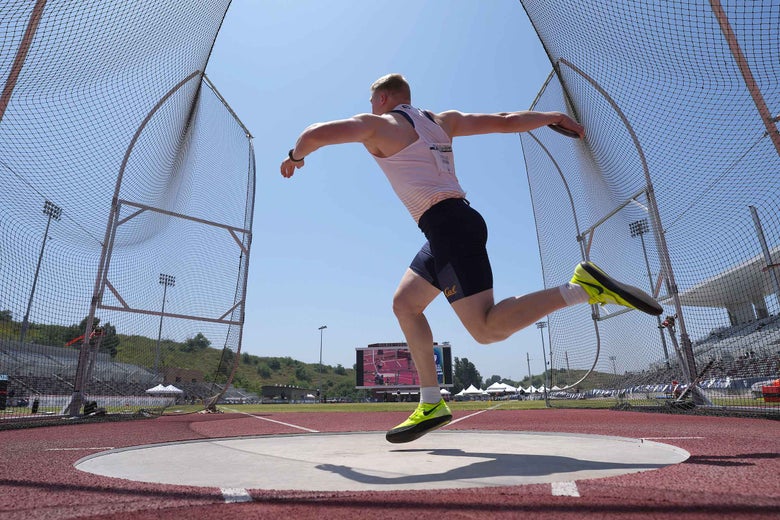
The discus throw is an event from the ancient Greek pentathlon dated to around 708 BC. In this event, the athlete throws a heavy disc, called the discus. The discus will vary in weight depending on the level and gender of the competitor and can be made from wood, plastic, fiberglass, rubber, carbon fiber, or metal, depending on the thrower's preference and competition.
The discus throw takes place in a throwing circle surrounded by a protective cage along the back and sides, with a designated landing area on the grass inside the track. Athletes use a rotational throwing technique to build speed and generate power before releasing the discus into the landing sector, where the distance is measured. A successful throw requires more than just strength and speed; athletes also need balance, coordination, and precision to achieve maximum distance.
Discus Throw Shoes
Rotational throw shoes are appropriate for the discus throw event. They often have smooth outsoles that allow for faster rotations and a mid-foot strap that provides a solid lockdown throughout every phase of the throw. If you are just starting out, the grippy outsole of a textured outsole throw shoe may be better suited as you learn proper technique.
Hammer Throw
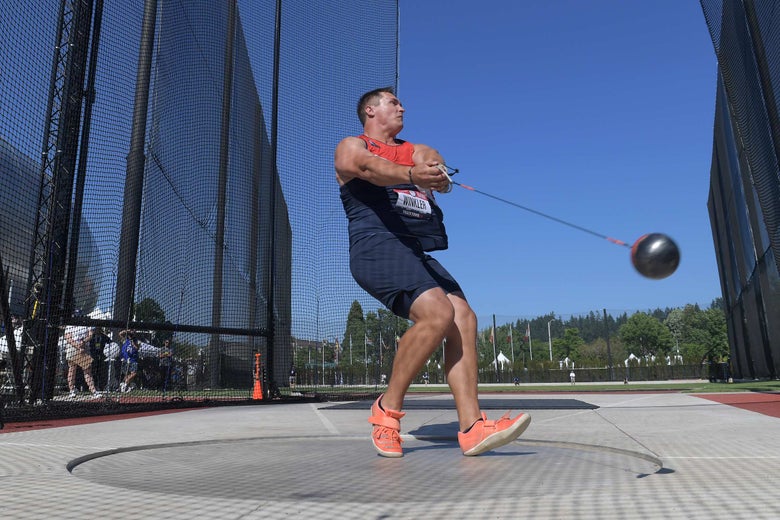
The hammer throw is an event where the participant throws a weighted ball on a steel wire with two hands for distance. The hammer throw derives its name from an ancient throwing sport in which an actual hammer, fitted with an additional weight, was the object tossed.
Much like the event space for the discus throw, the hammer throw includes a throwing circle, a protective cage along the back and sides of the circle, and a landing sector (typically a grassy area), although the circle for the hammer throw is slightly smaller. For the hammer throw technique, the competitor typically makes three or four turns before flinging the weight into the grassy landing area. This event requires strength, balance, and proper timing to execute the throw safely and effectively.
Hammer Throw Shoes
The main features of what to look for in a hammer throw shoe are consistent with what you would look for in the discus shoe or any of the rotational throw shoes. Most importantly, you want to look for a comfortable, snug fit, stability/security for that good lockdown feel on your foot, and also durability and versatility if you are planning to use the same shoe for training and competition, especially if you are using it for multiple events.
The shot put, discus, and hammer throw will require a shoe that has maneuverability and some grip, depending on your throwing style.


Javelin

Inspired by the act of hunting animals and warfare, the Greeks incorporated the javelin throw into the ancient Olympics. The javelin is a throwing event in which athletes throw a metal-tipped javelin as far as possible, using a combination of strength, power, timing, coordination, and precision. This event consists of a runway, a throwing arc, and a landing sector, which is usually a grassy area. The athlete uses the runway to generate momentum and then throws the javelin with an explosive, quick release.
Javelin Throw Boots and Spikes
Javelin throw shoes, often called "javelin boots", are uniquely designed for the javelin throw alone. Unlike other throwing shoes, javelin shoes feature spikes on the outsole for added traction during the approach and release.
With spikes in both the forefoot and heel, these shoes provide the grip athletes need to plant firmly and transfer power into their throw. A stiff outsole enhances stability, while a reinforced toe cap and secure lacing system offer additional support and protection during the explosive movements of the javelin throw.

Important Aspects for a Throw Shoe
Fit
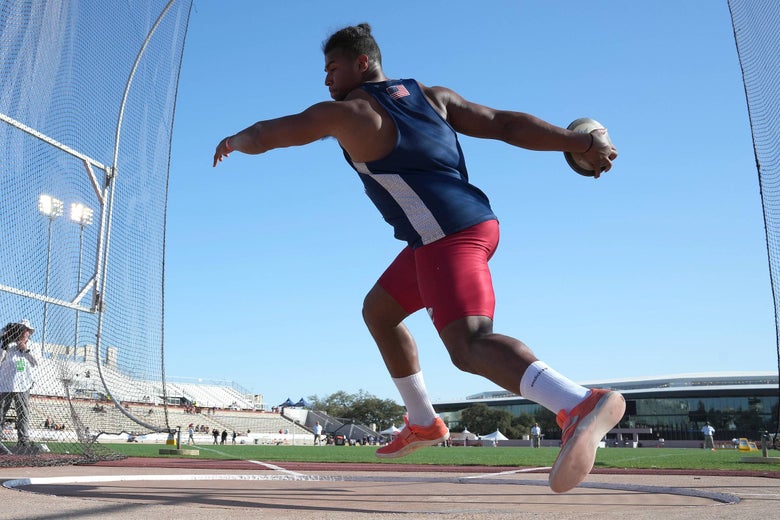
One of the most important considerations in selecting your shoes for the throwing events is the comfort of the fit. Just as a tennis player wants their racquet to be an extension of themselves, your throwing shoes should feel like a secure and natural part of your foot that gives you extra support to execute your throw.
You want your shoe to have a snug but comfortable lockdown, which will keep your footing secure during your throws. Most throw shoes come with VELCRO straps at the midfoot for that optimal, comfortable hold on your foot. Check out our How to Fit Track Spikes guide, where we go into a little more depth on the fit of the different types of shoes used for Track and Field.
Durability
Throwing puts a lot of stress on your shoes, so you'll want a pair that can hold up to repeated training sessions and competitions. As Coach Marra explains in his video, a good throwing shoe should combine durability with comfort, a firm feel, a supportive heel counter, and reliable traction for your event.
For shot put, discus, and hammer throwers, one pair of throwing shoes can often work across multiple events. That's why it's important to look for a durable outsole and midsole that can withstand repeated use while maintaining comfort and support. If you compete in multiple throwing events or train frequently, you may also want to consider rotating between two pairs to help extend the life of your shoes.
Stability
Stability is essential for maintaining control and generating power throughout a throw. A secure fit and reliable traction help athletes stay balanced and confidently execute explosive movements, whether rotating through the circle or planting their feet for the release.
Versatility
If you are competing in multiple throw events, you may choose a shoe that works for shot put, discus, and hammer throws. The javelin is the one throwing event that requires a specific shoe.
Finding the Right Shoes for Your Throwing Events
Every throwing event has its own unique movements, but choosing the right footwear starts with understanding your technique. Shot putters using the glide may benefit from extra traction, while rotational shot putters, discus throwers, and hammer throwers often prefer shoes that allow smoother pivots. Javelin throwers need specialized spikes for grip during their approach and release.
No matter your event or experience level, prioritize a secure, comfortable fit and footwear that supports your movement. The right combination of grip, stability, and maneuverability can help you feel more confident as you develop your technique.
Ready to find your fit? Explore our track and field throwing shoes or check out our Best Throw Shoes for Track & Field guide for recommendations.