A Beginners Guide to Track & Field Jump Events
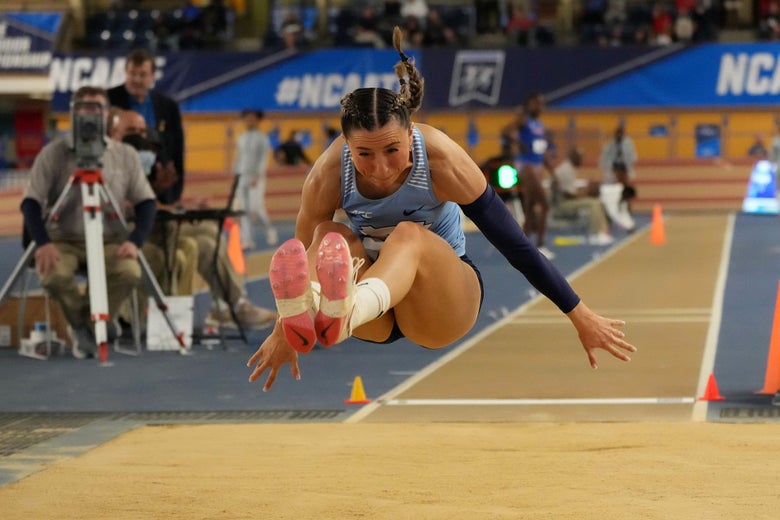
Track and field jump events, including the long jump, triple jump, pole vault, and high jump, challenge your speed, strength, and technique. The key is choosing the right jump spike designed specifically for each event to maximize your performance and comfort. In this guide, expert coach Harry Marra shares how to select the best spike for your event, helping you jump farther, higher, and safer this season.
Harry Marra has been in the track and field world as an athlete and coach for 60 years, but is best known as the coach of decathlon world record holder Ashton Eaton and Olympic medalist Brianne Theisen-Eaton. Some of Marra's other accolades include 2016 IAAF World Athletics Coach of the Year, 2012 Nike Coach of the Year, and the author of the 2022 book Stories From the Passenger Seat: Lessons Learned From a Lifetime of Coaching.
What are the Different Track & Field Jump Events?
Track and field jump events test an athlete's coordination and jumping ability through the combination of speed, strength, and agility, and have a rich history going back to ancient Greece's original Olympics' pentathlon events. There are four different events that lie within the jump category in track & field: long jump, triple jump, high jump, and pole vault.
The long jump and triple jump are known as the horizontal jumps, where the goal is to achieve maximum distance. The pole vault and high jump are considered vertical jumps, with the objective of clearing a bar at the greatest possible height without dislodging it.
Long Jump

The long jump consists of competitors running down a designated runway and jumping as far as they can from a mark (wooden or synthetic board) into a pit filled with soft sand. Controlled accelerated speed, a proper flat-footed take-off, and a high and far leap off the board are the fundamentals of success for the long jump. Because speed is such an important factor in the approach, it is not surprising that many long jumpers also compete successfully in sprints.
How to Choose a Long Jump Spike
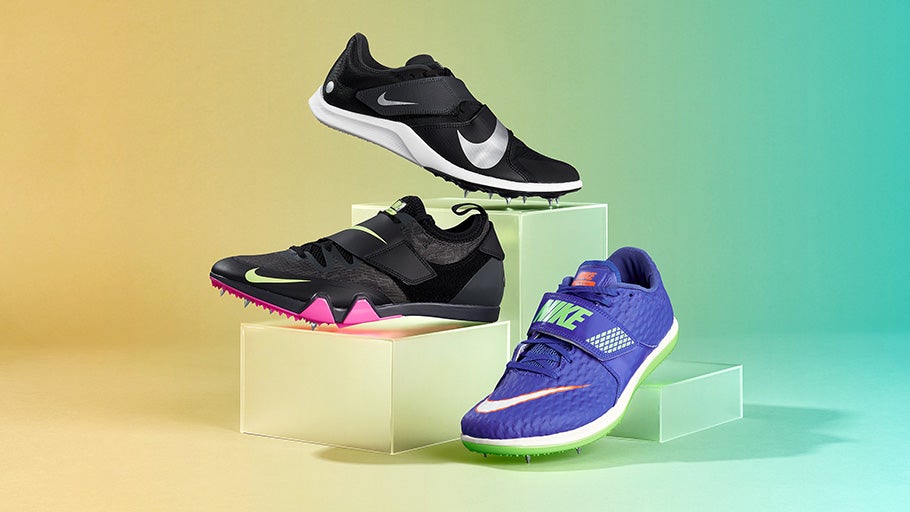
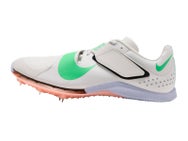
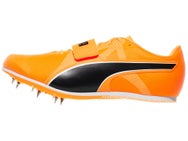
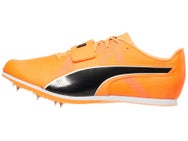
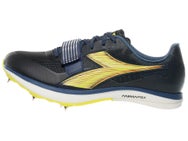
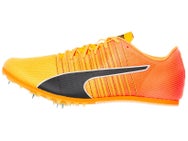
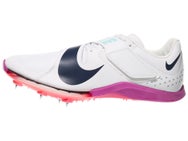
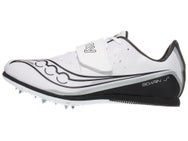
For the long jump event, look for a spike that can maximize your speed during your run-up approach, then supply stability and leverage during the take-off of your jump. Long jump spikes have a stable, flatter outsole and a firm back of the heel to help with proper leverage on take-off. The spike formation across the spike plate allows you to plant your foot and transition that energy to your jump. The midsole under the heel should remain firm but offer some cushioning for that flat-footed approach.
Triple Jump

The triple jump is another horizontal jump for distance on a designated runway that has a large sand pit at the end. But the difference lies in the approach to this jump.
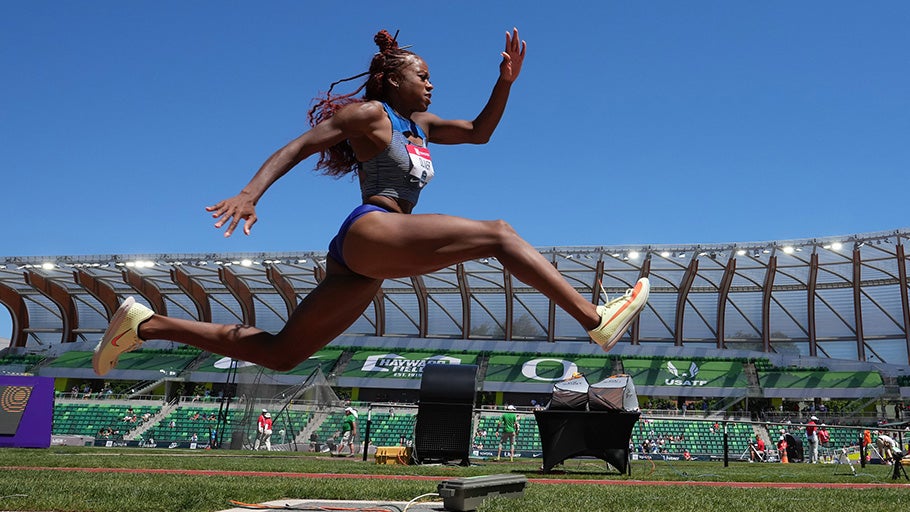
The triple jump athlete accelerates down the runway to then incorporate three distinct, continuous movements — a hop, in which the athlete takes off and lands on the same foot; a step, landing on the other foot; and a jump from the board into the sand pit. If a jumper touches the ground with the wrong leg, the jump is disallowed, so technique and rhythm are important.
How to Choose a Triple Jump Spike
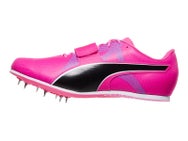
Triple jump athletes will use a tremendous amount of physical energy and impact on their feet when competing in this event. They have the same spike formation as the long jump spike and a very firm outsole plate for stability versus flexibility. It is very important to select a shoe with a secure fit to ensure the foot does not move too much during each phase of the jump.
One thing to keep in mind is that triple jump spikes and long jump spikes feature many of the same characteristics, but the big difference is that triple jump spikes feature a higher level of cushioning. The force exerted by athletes when landing on the ground between the hop and step phases can be up to 22 times their body weight, so the extra cushioning is important!
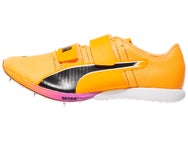

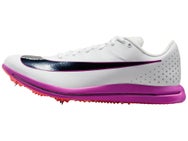
Pole Vault
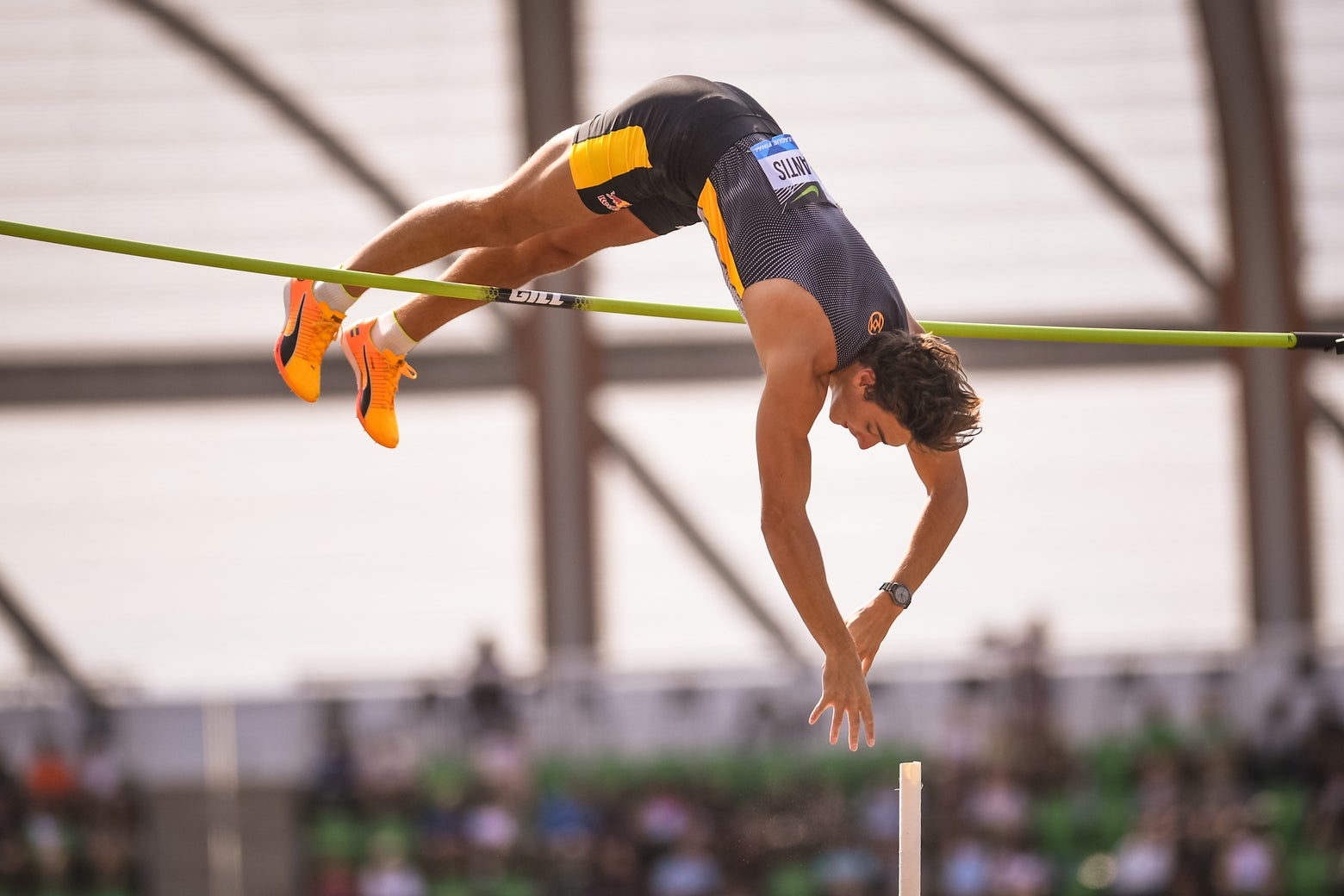
The pole vault competition is the event where athletes attempt to jump over an elevated crossbar by vaulting themselves up and over it with a long, flexible pole. Pole vaulters begin each vault attempt with a running start before planting the pole in a “box” on the ground while continuing to hold it. They use that momentum to arch their body feet-first over the crossbar without dislodging it. There is a large mat on the other side of the apparatus so that the athlete can safely land after their vault.
How to Choose a Pole Vault Spike
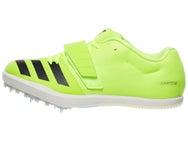
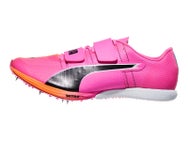
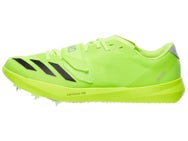
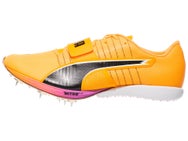
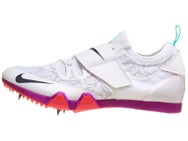
Pole vault spikes are very similar to long jump spikes in that they provide support across the full length of the spike. The design of the spike will provide the athlete with speed and acceleration to deliver a stable take-off. It is incredibly important to ensure your foot is secure in the shoe, and there is no slippage during acceleration or take-off.
For multi-event athletes, some jumpers find that a long jump spike can also work well for the pole vault event, saving on cost. Just make sure the spike you choose is durable enough to handle training and competition and has a snug and secure fit to provide you with a comfortable and safe experience for your event.

High Jump

For the high jump, competitors must jump over a horizontal bar without knocking the bar to the ground. Unlike the pole vault, athletes jump without a pole, requiring high levels of speed, explosive power, and agility. Jumpers have a runway or take-off area that is wide, so they can use a straight or angled running approach. They can only have one foot planted on the ground when initiating the jump. There is a large mat on the other side of the bar apparatus, so they are able to safely land after their attempt.
How to Choose a High Jump Spike
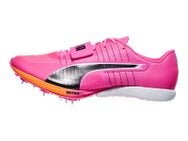
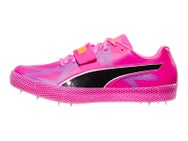
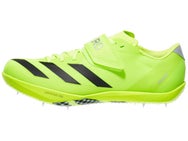
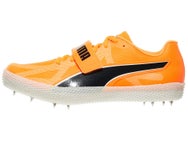
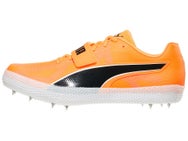
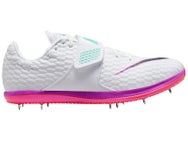
High jump shoes have spikes at the ball of the foot and also four extra spikes on the heel. These extra spikes serve to aid the jumper in transitioning from their run-up to take-off, so they will have a secure heel-first footing for maximum grip on any track. These spikes have a very stiff sole to provide enough energy to accelerate and abruptly transition that energy to a horizontal velocity to go up and over the bar.

Choosing the Best Jump Spike: What Matters Most
Whether you’re a beginner or an experienced jumper, here’s what you should look for in a jump spike to maximize your performance.

Versatility
Many beginner jump athletes do multiple jumping events to experiment. As your skills and experience grow, you may end up using the same shoes for your different events. Take a look at the different components of the shoe and use whichever option fits and feels best for your event.
For example, in his video, Coach Marra shared that when he coached Olympic decathlete Ashton Eaton, they used a triple jump spike for both the long jump and pole vault events, as that setup worked best for him. Comfort, stability, and durability are key factors to consider, especially if you’re using the same spikes for both practice and competition. If you plan to use one pair across multiple events, make sure they’re high-quality and built to withstand repeated use.
Stability
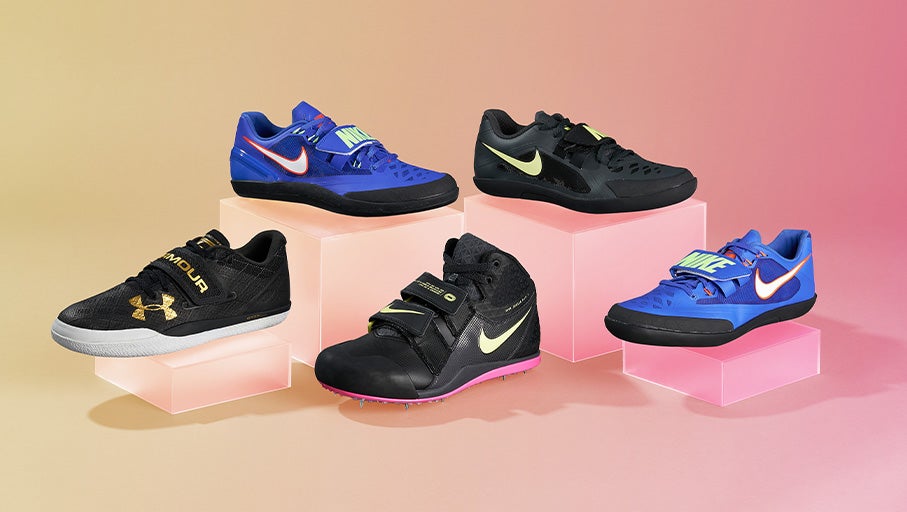
All four jumping events use a run-up and a takeoff where the athlete needs to stay flat-footed. Jumping spikes are built with a stiff plate on the bottom and a strong heel to help keep the foot and ankle stable. A snug, comfortable fit and good stability are important for jumping safely and getting the best performance.

FAQ
Can one pair of spikes work for all jump events?
Short answer—yes. If you do not know what events you will be doing, it might be best to start with a multipurpose spike. If you know you will be doing a jump event, but don't know which jump event, you can still use one shoe for all events. But it would be good to opt for a jump spike rather than a multipurpose spike in this case.
How should my track and field jump spike fit?
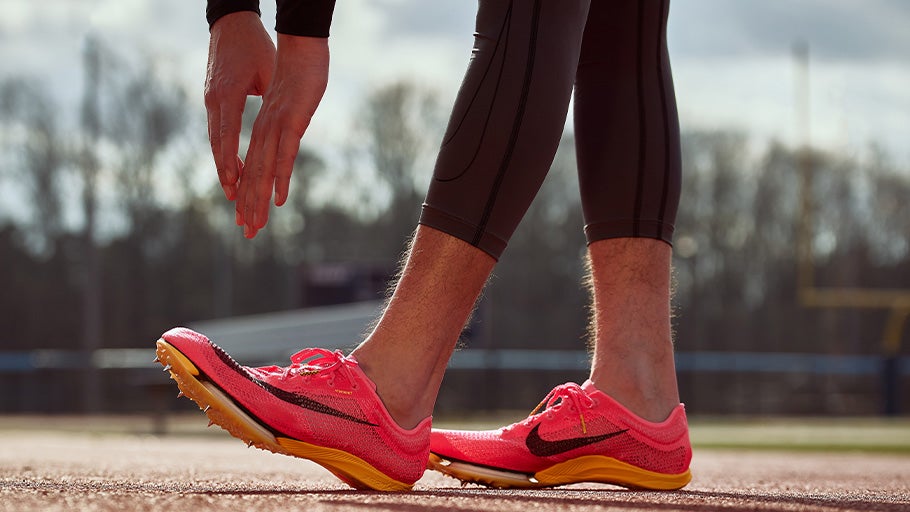
Unlike running shoes, your jump spikes should fit snugly so that you do not have extra movement in your foot transitioning from the approach to the take-off phase. You want your shoe to have a tight but comfortable lockdown, which is necessary to improve performance and avoid injury. Most jump spikes come with velcro straps at the midfoot for that optimal comfortable hold on your foot.
Finding the Right Jump Spike for Your Event
| Spike Type | Spike Plate | Spike Length | Best For |
| Long Jump | Lightweight with traction focus | 6-9mm | Speed and explosive takeoff |
| Triple Jump | Extra cushioning | 6-9mm | More cushioning |
| Pole Vault | Rigid forefoot for stability | 6-9mm | Planting pole and controlled launch |
| High Jump | Four extra spikes in the heel | 6-9mm | Vertical height and agility |
Whether you’re a seasoned athlete chasing new bests or just getting started in track and field, choosing the right jump spike can make a huge difference in your performance and confidence. Each jumping event demands its own balance of speed, stability, and support, but all athletes benefit from a secure fit and durable build that can handle training and competition.
Coach Harry Marra’s decades of coaching experience remind us that there’s no single perfect spike. What matters most is finding the shoe that complements your individual technique, comfort, and event needs. As he emphasized in our interview, the right spike is the one that helps you move efficiently and confidently through every phase of your jump.